Draw blood. Launch your career.
Intro to Phlebotomy Technician gives aspiring technicians a step-by-step clinical education — from your first venipuncture to your CPT1 exam strategy — so you walk into any lab or hospital setting ready to perform, not just observe.
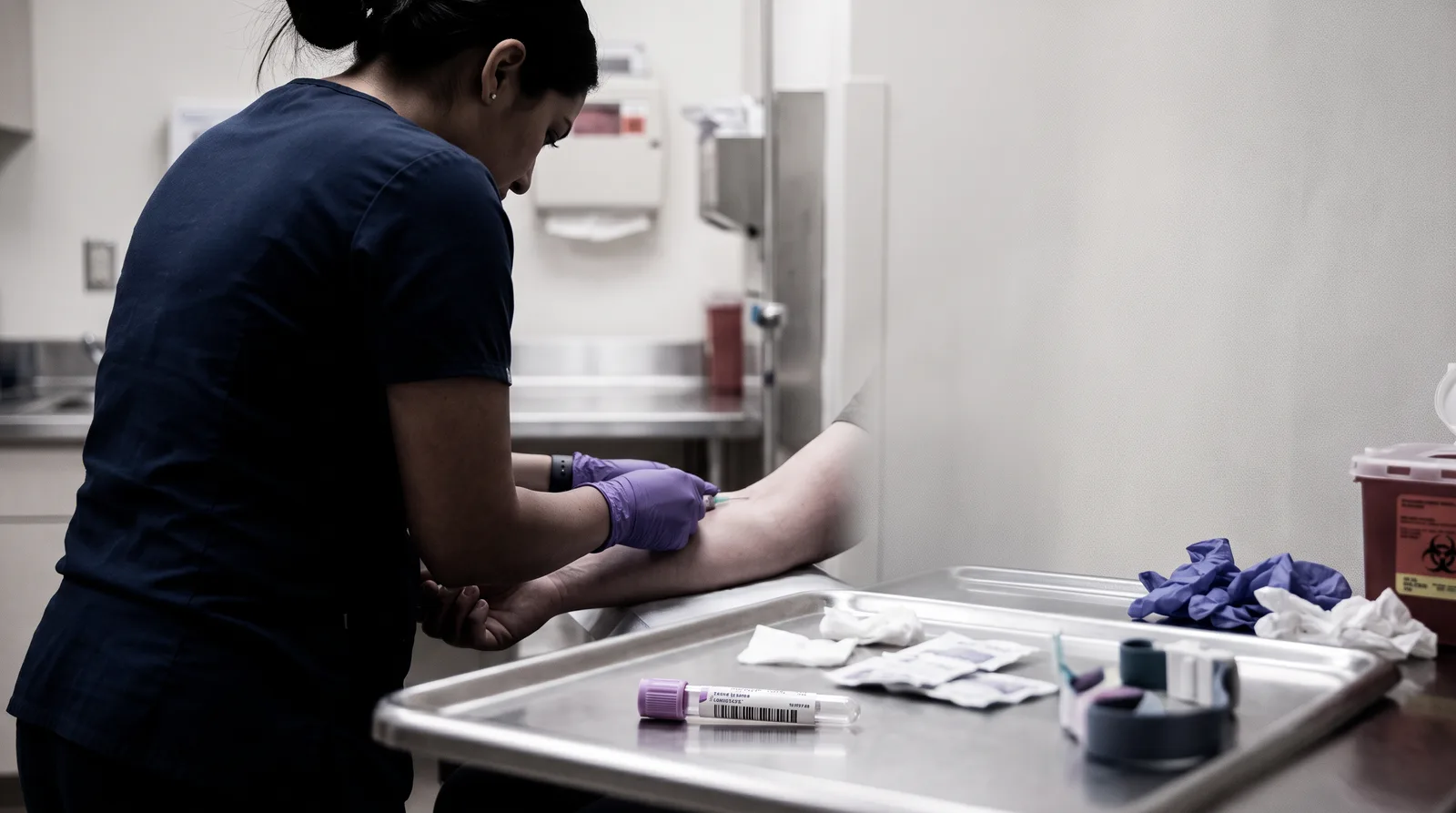
"Our job is to make sure you understand the 'why' behind every step — because that's what keeps patients safe and gets you hired."
— LLH Online Learning
What you'll learn
What you'll be able to do
- Perform venipuncture and capillary puncture using correct technique and equipment selection
- Identify major veins, anatomical landmarks, and best-site selection for blood draws
- Follow OSHA bloodborne pathogen standards and infection control protocols with confidence
- Properly label, handle, and process blood specimens to meet lab compliance requirements
- Communicate effectively with patients to reduce anxiety and manage difficult draws
- Prepare a professional resume and understand the CPT1 certification exam structure
How it works
A course that adapts to you
This isn't a set of static videos. Every lesson is generated live and tuned to where you actually are.
We learn your level
A quick placement check tailors your starting point so you're never bored or lost.
Lessons adapt as you go
Each lesson is written for your pace and your goal, adjusting as your skills grow.
Your AI coach keeps you moving
Checkpoints, feedback, and gentle nudges turn progress into a real result.
The curriculum
What's inside your school
8 modules · 73 lessons

Foundations of Phlebotomy Practice
Establishes the professional role, healthcare setting context, and core medical terminology every phlebotomy technician must know before entering a clinical environment.
- 1.1The Phlebotomy Technician RoleIncluded
- 1.2Healthcare Settings and the Clinical LabIncluded
- 1.3Essential Medical Terminology for PhlebotomyIncluded
- 1.4Professionalism and Patient-Centered CareIncluded
- 1.5Scope of Practice and the Healthcare TeamIncluded
- 1.6Legal and Ethical Responsibilities in PhlebotomyIncluded
- 1.7HIPAA, Patient Privacy, and ConfidentialityIncluded
- 1.8The Laboratory Testing Process: Preanalytical, Analytical, and Postanalytical PhasesIncluded
Anatomy, Veins, and Site Selection
Teaches the anatomical knowledge needed to identify major veins, locate landmarks, and choose the safest, most effective draw site for each patient.
- 2.1The Circulatory System and Blood CompositionIncluded
- 2.2Major Veins Used in VenipunctureIncluded
- 2.3Anatomical Landmarks and Palpation TechniqueIncluded
- 2.4Best-Site Selection and Difficult Vein StrategiesIncluded
- 2.5Skin Anatomy and the Importance of Tissue StructuresIncluded
- 2.6Veins, Arteries, and Nerves: Knowing the DifferenceIncluded
- 2.7Sites to Avoid and When Not to DrawIncluded
- 2.8Factors That Affect Vein SelectionIncluded
Safety, Infection Control, and OSHA Compliance
Ensures students can apply OSHA bloodborne pathogen standards, PPE protocols, and infection control practices to protect themselves and every patient.
- 3.1OSHA Bloodborne Pathogen StandardsIncluded
- 3.2Personal Protective Equipment (PPE) and Hand HygieneIncluded
- 3.3Sharps Safety and Needlestick PreventionIncluded
- 3.4Infection Control and Decontamination ProtocolsIncluded
- 3.5The Chain of Infection and Standard PrecautionsIncluded
- 3.6Transmission-Based Precautions and Isolation ProceduresIncluded
- 3.7Blood and Body Fluid Exposure: What to Do After an ExposureIncluded
- 3.8Biohazard Waste, Sharps Disposal, and Workplace SafetyIncluded
Phlebotomy Equipment, Tubes, and Test Requirements
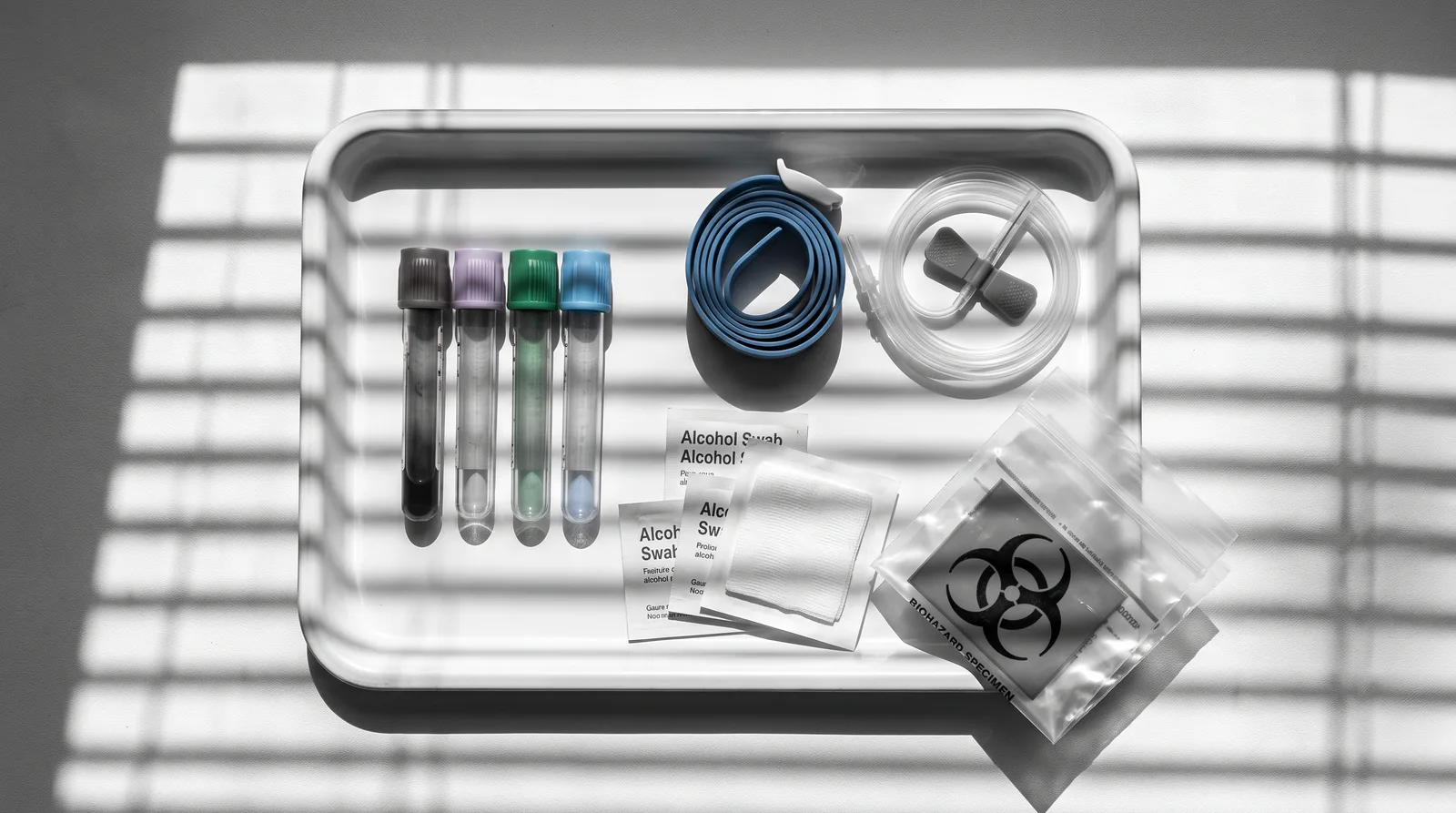
Get hands-on with the tools of the trade! In this module, you'll explore the full range of phlebotomy equipment — from needles and syringes to vacutainer systems and butterfly sets. You'll learn to identify the different types of collection tubes, understand their color-coded additives, and know exactly which tube to use for specific lab tests. By the end of this module, you'll be equipped to select the right tools for any draw with accuracy and confidence — a critical skill every successful Phlebotomy Technician must master.
- 4.1Needles, Holders, Syringes, and Safety DevicesIncluded
- 4.2Evacuated Tube Systems and Butterfly Collection SetsIncluded
- 4.3Blood Collection Tubes and AdditivesIncluded
- 4.4Understanding Anticoagulants, Clot Activators, and Separator GelsIncluded
- 4.5Order of DrawIncluded
- 4.6Additive Carryover and Why Order of Draw MattersIncluded
- 4.7Matching Common Laboratory Tests to Collection TubesIncluded
- 4.8Equipment Selection for Different Patients and VeinsIncluded
Venipuncture and Capillary Collection
Develops hands-on competency in performing venipuncture and capillary puncture using proper equipment selection, order of draw, and technique.
- 5.1Preparing for the Blood Collection ProcedureIncluded
- 5.2Patient Identification and Verifying the Test OrderIncluded
- 5.3Positioning the Patient and Applying the TourniquetIncluded
- 5.4Performing a Routine Venipuncture: Step-by-StepIncluded
- 5.5Using a Butterfly Collection SetIncluded
- 5.6Syringe Collection and Specimen TransferIncluded
- 5.7Completing the Draw and Achieving HemostasisIncluded
- 5.8Capillary Puncture: Fingerstick CollectionIncluded
- 5.9Infant Heel-Stick CollectionIncluded
- 5.10Capillary Order of DrawIncluded
- 5.11Unsuccessful Draws, Repositioning, and When to StopIncluded
- 5.12Managing Common Collection ComplicationsIncluded
Special Collections and Laboratory Procedures
Go beyond standard draws and master the specialized collection techniques and laboratory procedures every confident Phlebotomy Technician needs to know. In this module, you'll explore a variety of special collection methods — including timed draws, blood cultures, capillary collections, and arterial punctures — along with proper specimen handling, processing, and chain-of-custody protocols. You'll also gain a solid understanding of key laboratory procedures, quality control standards, and compliance requirements that ensure accurate results and patient safety. By the end of this module, you'll be fully equipped to handle complex collection scenarios with precision and professionalism.
- 6.1Blood Culture Collection and Contamination PreventionIncluded
- 6.2Glucose Tolerance TestingIncluded
- 6.3Therapeutic Drug Monitoring and Timed SpecimensIncluded
- 6.4Fasting, STAT, and Timed CollectionsIncluded
- 6.5Coagulation Specimens and Light-Blue Tube RequirementsIncluded
- 6.6Blood Bank Specimens and Identification RequirementsIncluded
- 6.7Cold Agglutinins, Bilirubin, Ammonia, and Other Special-Handling SpecimensIncluded
- 6.8Urine, Stool, and Other Non-Blood Specimen BasicsIncluded
- 6.9Point-of-Care Testing and Quality ControlIncluded
- 6.10Chain of Custody and Forensic/Drug-Screen CollectionsIncluded
Specimen Handling, Labeling, and Lab Compliance
Trains students to correctly label, transport, process, and reject specimens in accordance with lab compliance and quality standards.
- 7.1Specimen Labeling Requirements and Patient IdentificationIncluded
- 7.2Specimen Handling, Transport, and StorageIncluded
- 7.3Specimen Processing and Centrifugation BasicsIncluded
- 7.4Specimen Rejection and Quality AssuranceIncluded
- 7.5Hemolysis: Causes, Prevention, and Effects on TestingIncluded
- 7.6Clotted, Underfilled, and Contaminated SpecimensIncluded
- 7.7Temperature, Light, and Time-Sensitive SpecimensIncluded
- 7.8Preanalytical Errors and How Phlebotomists Prevent ThemIncluded
- 7.9Documentation, Incident Reporting, and Corrective ActionIncluded
Patient Communication, Career Launch, and CPT1 Prep
Builds patient interaction skills, anxiety-management strategies, and everything needed to enter the job market and pass the CPT1 certification exam.
- 8.1Communicating with Patients and Reducing Draw AnxietyIncluded
- 8.2Working with Pediatric, Elderly, and Special-Needs PatientsIncluded
- 8.3Difficult, Fearful, or Uncooperative PatientsIncluded
- 8.4Professional Communication with Nurses and Laboratory StaffIncluded
- 8.5Building a Phlebotomy Resume and PortfolioIncluded
- 8.6Searching and Applying for Your First Phlebotomy JobIncluded
- 8.7Common Phlebotomy Interview QuestionsIncluded
- 8.8Preparing for a Skills InterviewIncluded
- 8.9Understanding National Phlebotomy CertificationIncluded
- 8.10Certification Exam Study Strategy and PracticeIncluded
Who it's for
Is this you?

Career-changers entering healthcare
She's leaving a non-clinical field and needs a clear, structured path into healthcare — phlebotomy is her entry point, and this course gives her the foundation to make the leap with confidence.

Medical assistant students
He's in an MA program and wants to strengthen his clinical skill set — adding phlebotomy competency and CPT1 certification prep makes him a more competitive hire right out of school.

CNA or PCT expanding scope
She already works in patient care but wants to broaden what she can do on the floor — mastering venipuncture technique and lab compliance opens new roles and better pay.

Recent high school or college grads
He wants a real healthcare credential fast without a four-year degree — phlebotomy is a practical, in-demand skill and this course gets him job-ready from scratch.

Healthcare workers returning to practice
She took time away from clinical work and needs a refresher that's rigorous enough to rebuild confidence and get her current on OSHA standards and specimen compliance before re-entering the workforce.

Lab or clinical support staff
He works in a healthcare adjacent role — scheduling, medical records, lab support — and wants to move into a hands-on technician position with the proper clinical and safety training behind him.
Questions
Frequently asked
Your teacher
A note from your teacher
LLH Online Learning
If you're reading this, there's a good chance you're standing at a crossroads. Maybe you've decided healthcare is where you want to be, but you're not sure how to get a foot in the door. Maybe you're already working in a clinical setting and you know that phlebotomy skills would open new doors for you. Or maybe you've been thinking about this for a while and you just need a program that actually teaches you the right way — not the shortcut version.
I get it. Phlebotomy looks simple from the outside. You find a vein, insert a needle, collect the blood. But anyone who's worked in a clinical lab or on a hospital floor knows the reality is more demanding than that. There's a precise order of draw to follow. There are OSHA standards that aren't optional. There are patients who are terrified of needles, pediatric patients who require a completely different approach, and veins that refuse to cooperate. And behind every successful blood draw is a specimen that has to be labeled, handled, transported, and processed correctly — or it gets rejected and the patient gets stuck again.
That's why I built Intro to Phlebotomy Technician the way I did. Every section mirrors what you'll actually encounter in a real clinical environment. We start with the fundamentals — your role, the healthcare setting, medical terminology — and we build from there in a logical, layered sequence. Anatomy before technique. Safety before needles. Communication skills woven throughout. By the time you reach venipuncture procedure, you'll understand why each step exists, not just what to do. That understanding is what separates a technician who performs confidently from one who freezes under pressure.
I also believe that getting job-ready means more than passing a skills checklist. It means knowing how to present yourself. The final section of this course covers the CPT1 certification exam structure and study strategy, plus how to build a professional phlebotomy resume and portfolio. Because earning the knowledge is only half the equation — you need to communicate that value to employers clearly and credibly.
This course won't talk down to you, and it won't gloss over the science to make things feel easier than they are. What it will do is walk with you, step by step, until you reach the other side — confident, competent, and ready. I'm glad you're here. Let's get started.
— LLH Online Learning
Start your journey today
Get instant access — learn at your own pace with an AI coach in your corner.
$99/mo
Recurring billing · cancel anytime
Secure checkout · Instant access
- 8 modules, 73 lessons
- AI-adaptive lessons tuned to your level
- Quizzes & checkpoints to lock in progress
- Your own AI learning coach
- Learn on any device, at your pace
- Full access for as long as you're subscribed